Rosa Butler · 17 October 2026
Exploring Encryption Standards and Their Practical Rollout in Portable Personal Knowledge Tools
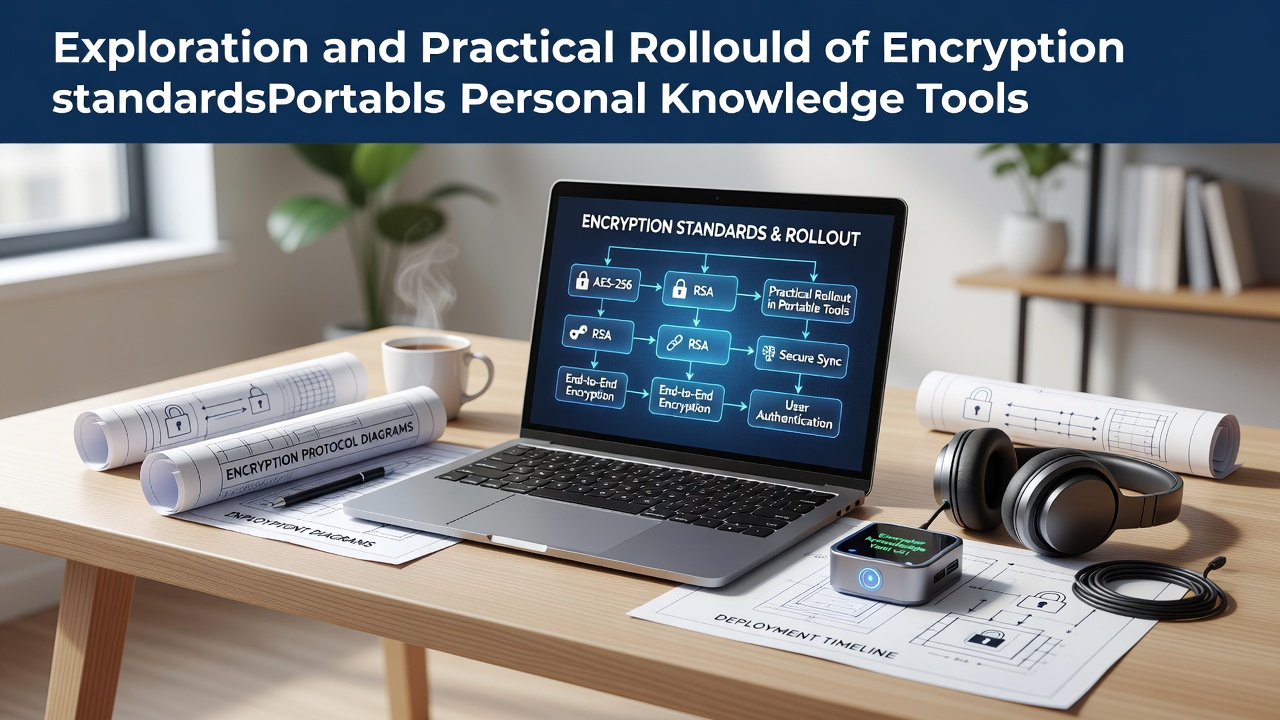
Portable personal knowledge tools encompass mobile applications and lightweight devices that store notes, documents, and structured information for individual users, and encryption standards form the backbone of their security frameworks. These standards define algorithms and protocols that convert readable data into protected formats, ensuring confidentiality during storage and transmission across networks. Researchers have documented how standards such as the Advanced Encryption Standard (AES) provide the foundation for most implementations in this space, with AES-256 serving as a benchmark for many commercial and open-source solutions since its adoption by government bodies in the early 2000s.
Data from industry reports indicate that portable tools often integrate AES in combination with other mechanisms like key derivation functions and secure random number generators, while developers prioritize compatibility with resource-constrained hardware such as smartphones and tablets. Studies conducted by academic institutions show that end-to-end encryption models prevent intermediary access, allowing users to maintain control over their knowledge repositories without relying on cloud providers for decryption keys. Observers note that this approach aligns with regulatory expectations in multiple regions, including guidelines from the National Institute of Standards and Technology in the United States and recommendations issued by the European Union Agency for Cybersecurity.
Core Encryption Standards in Use
Encryption standards evolve through rigorous testing and peer review processes, and portable personal knowledge tools adopt those that balance security strength with performance efficiency. AES remains dominant because it supports variable key lengths and operates effectively on limited processing power, yet newer protocols like those based on post-quantum cryptography appear in pilot phases as organizations prepare for future computational threats. Evidence from technical evaluations reveals that tools frequently combine symmetric encryption for data at rest with asymmetric methods such as RSA or elliptic curve variants for key exchange, creating layered protections that address both local storage and synchronization across devices.
Implementation details vary by platform, and developers reference established libraries to reduce vulnerabilities during rollout. Those who analyze deployment patterns find that standards compliance often includes regular audits and updates to address identified weaknesses, whereas integration with hardware security modules on modern mobile processors adds another layer of protection for sensitive keys.
Practical Implementation Across Devices
Rollout of these standards in portable environments requires attention to user experience alongside technical requirements, since complex key management can deter adoption. Applications typically generate unique keys per user or per repository, then encrypt individual notes or entire databases before saving them to local storage or transmitting them during sync operations. Research indicates that zero-knowledge architectures, where service providers never hold decryption capabilities, have gained traction in several tools because they meet privacy expectations without additional user intervention.
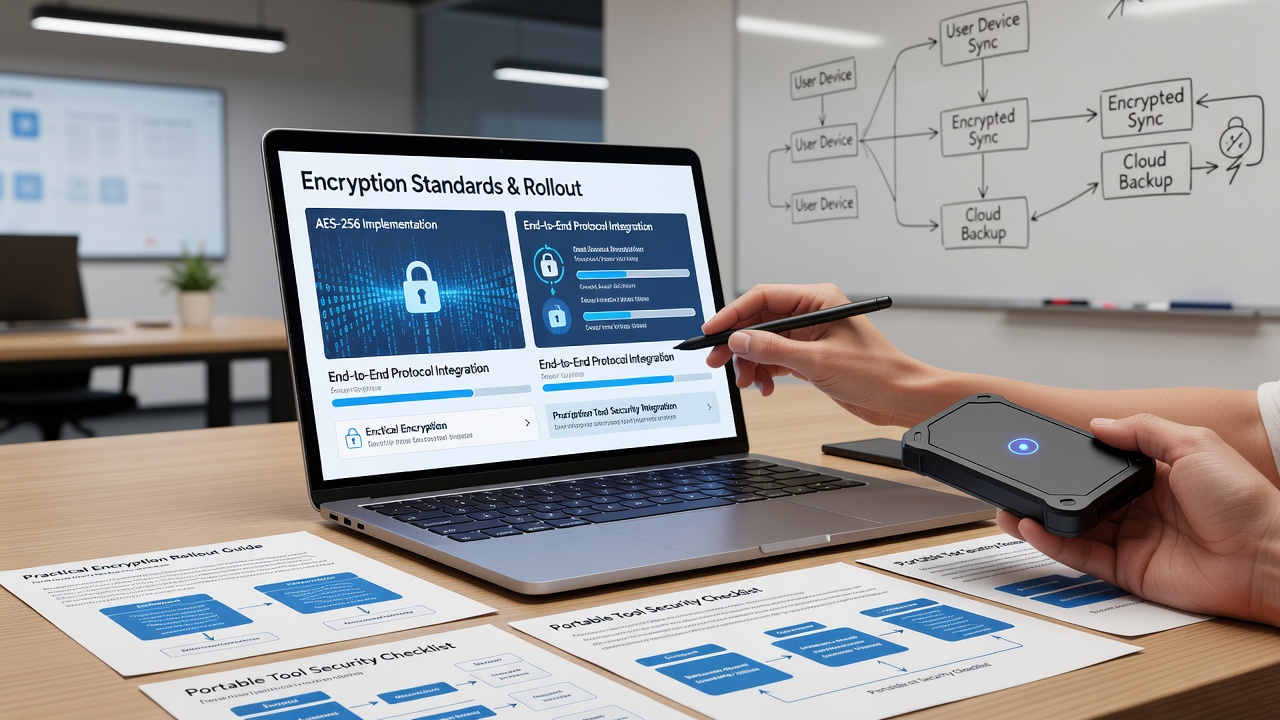
Case examples illustrate how developers embed encryption into existing workflows: one project integrated AES-256 with authenticated encryption modes to prevent tampering, while another incorporated forward secrecy to limit exposure if long-term keys become compromised. Figures from security assessments demonstrate that such features reduce risks associated with device loss or theft, and integration with biometric authentication on portable hardware further streamlines access without weakening overall protections. Data shows that synchronization protocols often employ transport layer security in addition to application-level encryption, creating defense-in-depth strategies that address multiple attack vectors simultaneously.
Challenges and Adaptations Observed in 2026
By October 2026, updates to encryption standards and device capabilities continue to influence how portable knowledge tools evolve their security measures. Regulatory shifts in various jurisdictions prompt developers to incorporate enhanced logging and audit trails while maintaining user privacy, and hardware advancements enable more efficient execution of computationally intensive algorithms. Those tracking these developments report that cross-platform consistency remains a priority, since users expect seamless access across operating systems without compromising encryption integrity.
Adaptations include modular encryption frameworks that allow tools to swap algorithms as standards mature, and community-driven projects contribute testing data that informs broader industry practices. Evidence suggests that education around key backup procedures helps mitigate risks of permanent data loss, whereas automated recovery options balance convenience with security protocols.
Conclusion
Encryption standards underpin the reliability of portable personal knowledge tools, and their practical rollout reflects ongoing collaboration between standards bodies, developers, and hardware manufacturers. Continued monitoring of emerging protocols and compliance requirements ensures that these systems protect user information effectively across diverse environments and device types.