Lars Schmid · 19 September 2026
Adapting Note Hierarchies for Cross-Platform Synchronization in Compact Digital Repositories
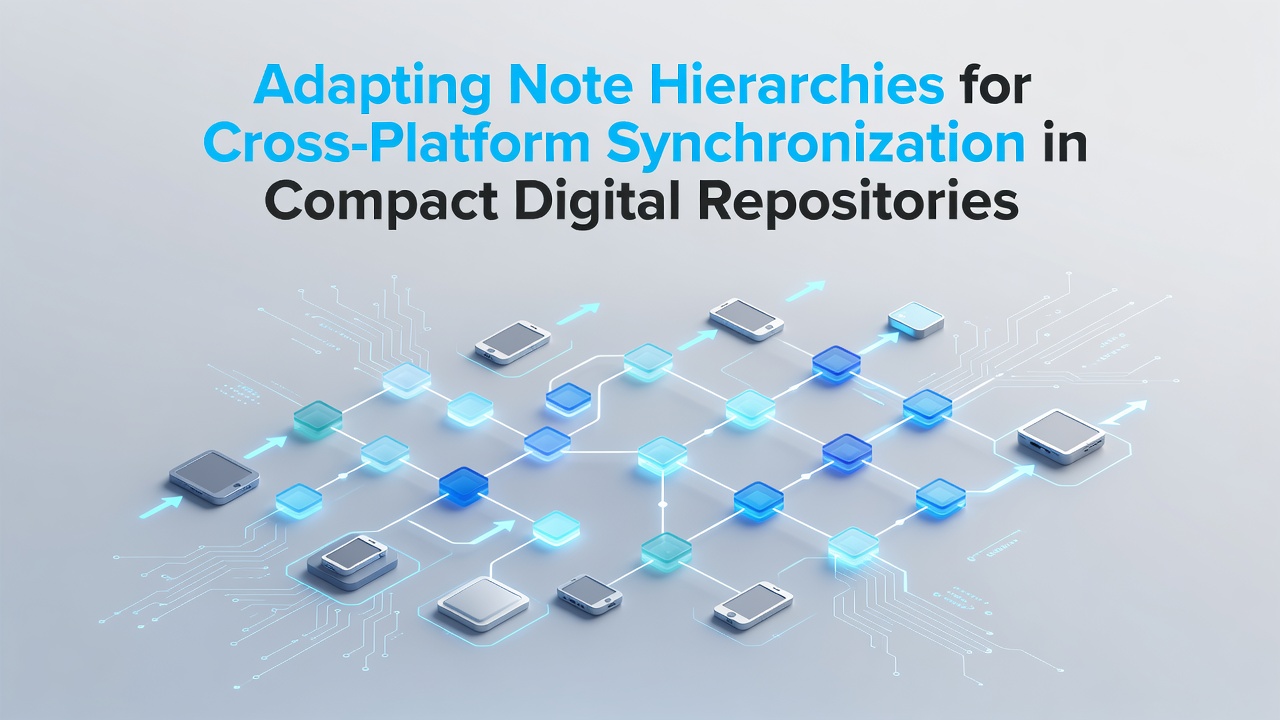
Compact digital repositories handle structured notes through layered hierarchies that organize content into nested categories, tags, and relationships while maintaining small storage footprints. These systems rely on tree-based or graph-oriented models where each node represents a note and edges define parent-child connections or references. Adaptation for cross-platform synchronization requires mapping these structures to protocols that resolve differences in device capabilities, network conditions, and data formats without inflating repository size.
Core Components of Note Hierarchies in Compact Systems
Researchers have documented how compact repositories use lightweight markup combined with metadata indexes to represent hierarchies efficiently, and data from multiple studies shows that formats such as JSON or binary trees reduce overhead compared with traditional folder systems. Observers note that synchronization becomes feasible when hierarchies incorporate unique identifiers for each node alongside version vectors that track changes across devices. In September 2026, updates to several open-source repository tools incorporated refined conflict-detection algorithms that operate directly on these identifiers while preserving compact storage.
Those who maintain such systems often apply selective replication, where only modified branches of the hierarchy transfer during sync sessions. This approach limits bandwidth use and storage growth, according to reports from academic computing labs. Figures reveal that repositories limited to under 50 megabytes per user can still support thousands of notes when hierarchies employ delta encoding for updates rather than full copies.
Technical Approaches to Cross-Platform Adaptation
Engineers adapt hierarchies by translating local tree structures into platform-agnostic representations that support merge operations. One method involves embedding operational logs within each node so that concurrent edits on different devices resolve through last-writer-wins rules or more advanced commutative replicated data types. Studies indicate that these logs remain compact when they store only operation hashes and timestamps instead of complete note content.
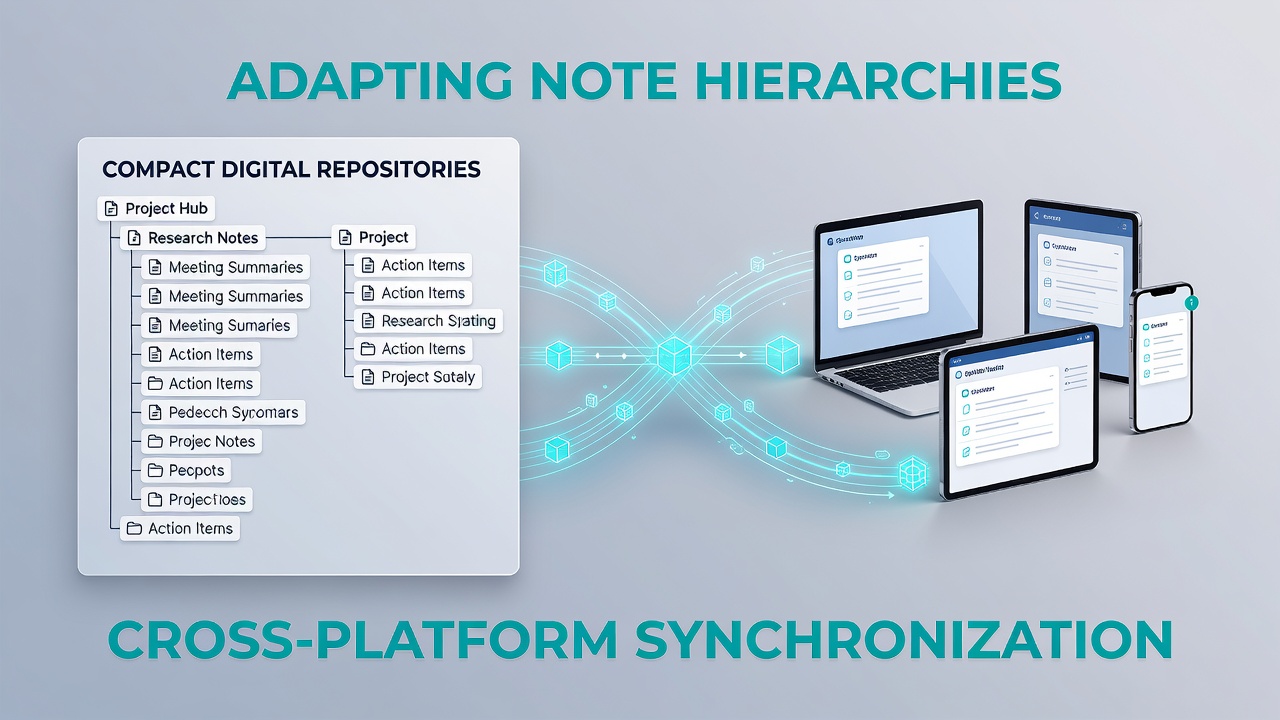
Another technique applies hierarchical partitioning, where notes divide into shards that sync independently yet maintain parent references through backlinks. Data indicates this reduces conflict rates because smaller shards encounter fewer simultaneous edits. Experts have observed that platforms running on resource-constrained hardware benefit when adaptation layers strip non-essential metadata during transfer and restore it upon receipt.
Handling Conflicts and Consistency Models
Cross-platform environments introduce conflicts when users modify the same hierarchy branch on separate devices before synchronization completes. Researchers discovered that eventual consistency models combined with automated merge strategies address most cases while allowing manual intervention for complex structural changes such as node moves or deletions. Evidence suggests that logging parent-child adjustments separately from content edits improves recovery accuracy without expanding repository size significantly.
Those managing enterprise deployments report success when hierarchies include permission flags that propagate during sync, ensuring access rules remain aligned across platforms. Government technology assessments from Canadian federal agencies highlight how standardized identifier schemes prevent duplicate node creation during multi-device use. Industry organizations focused on data interoperability have published guidelines that recommend embedding platform-specific constraints as optional attributes rather than core hierarchy elements.
Implementation Patterns Across Devices
Mobile applications often compress hierarchy metadata into indexed arrays that load quickly into memory, whereas desktop clients maintain fuller graph representations for advanced querying. Synchronization layers bridge these differences through format converters that preserve structural integrity. One study revealed that repositories using bidirectional converters achieved consistent performance across operating systems while keeping total storage under predefined limits.
Web-based interfaces present additional constraints because browser storage quotas limit repository size, so adaptation frequently involves lazy loading of hierarchy branches. Figures from university research groups show that progressive synchronization of only visible nodes cuts initial load times by substantial margins without sacrificing long-term consistency.
Conclusion
Adaptation of note hierarchies for cross-platform synchronization in compact digital repositories centers on efficient identifier schemes, selective replication, and conflict-resolution mechanisms that operate within storage constraints. Data from ongoing implementations demonstrates measurable improvements in consistency and resource use as these methods mature. Continued refinement of these techniques supports broader adoption across varied hardware environments while maintaining the compact nature of the underlying repositories.